Alexander Oettl

Working papers

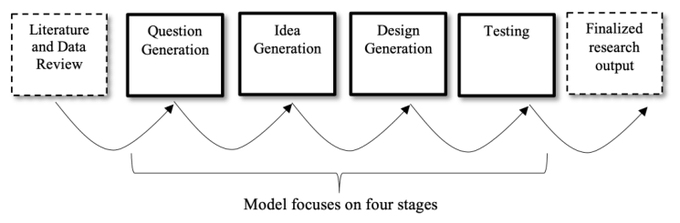
Stylized stages of scientific research: question, idea, and design generation, then testing

NBER Working Paper 34953, March 2026

AI in Science

with Ajay Agrawal and John McHale

Abstract

We explore the impact of artificial intelligence (AI) on the knowledge production function. We characterize AI as a tool, not for full automation but rather for augmentation through enhanced search over combinatorial spaces. This leads to increased scientific productivity. We decompose knowledge production into a multi-stage process to shed light on the “jagged frontier” of AI in science, revealing differential returns to different tools across domains (e.g., data-rich biology vs. anomaly-sparse physics) and workflow stages (e.g., strong design aids like AlphaFold vs. subtler question generation tools). We treat human judgment as indispensable for tasks involving abductive inference, contextual nuance, and trade-offs, particularly in data-sparse environments. Drawing on a task-based model that distinguishes “ordinary” from AI-expert scientists, we describe how exogenous improvements in AI yield nonlinear productivity gains amplified by the share of scientists that are AI-experts to underscore the role of AI complements like skills training and organizational design.
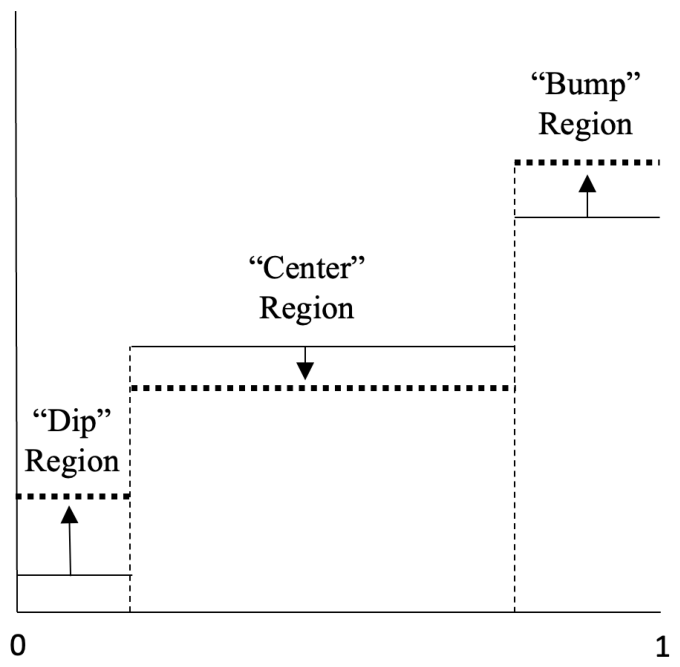
Equilibrium skill densities before and after an AI improvement: mass moves from the center region to the dip and bump regions

NBER Working Paper 34781, January 2026 · Revise & resubmit

Enhancing Worker Productivity Without Automating Tasks: A Different Approach to AI and the Task-Based Model

with Ajay Agrawal and John McHale

Abstract

The task-based approach has become the dominant framework for studying the labor-market effects of artificial intelligence (AI), typically emphasizing the replacement of human workers by machines. Motivated by growing empirical evidence that contemporary AI is more often used as a tool that augments workers, this paper develops two related task-based models in which AI enhances worker productivity without automating tasks. Abstracting from capital, we develop a pair of related task-based models that examine how technological progress in AI that provides new tools to augment workers affects aggregate productivity and wage inequality. Both models emphasize the role of human capital in intermediating the effects of AI-related technological shocks. In the first model, AI use requires specialized expertise, and technological progress expands the set of tasks for which such expertise is effective. We show that a larger supply of AI expertise amplifies the productivity gains from improvements in AI technology while attenuating its adverse effects on wage inequality. The second model focuses on non-AI skills, allowing AI tools to alter the set of tasks that workers can perform given their skills. In equilibrium, workers allocate across tasks in response to wages, generating an endogenous distribution of skills across the task space. A central result is that aggregate productivity and wage inequality depend on different global properties of this equilibrium distribution: productivity is particularly sensitive to thinly staffed tasks that create bottlenecks, while wage inequality is driven by the concentration of workers in a narrow set of tasks. As a result, improvements in AI tools can induce non-monotonic co-movement between productivity and inequality. By linking these mechanisms to multidimensional human capital—including AI expertise and higher-order non-AI skills—the paper highlights the role of education and training policies in shaping the economic consequences of AI-driven technological change.

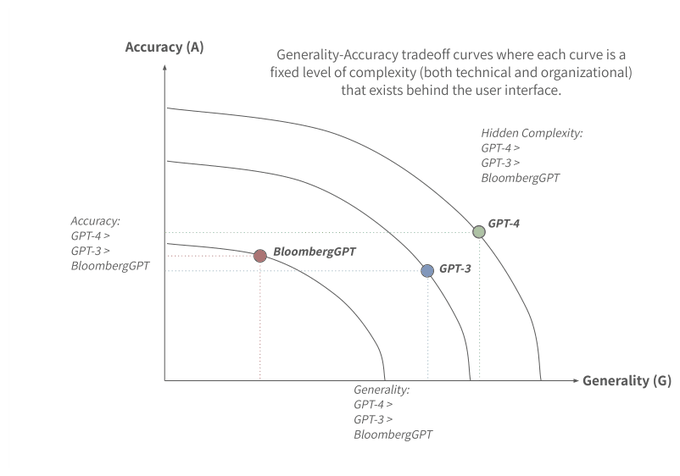
Generality–accuracy trade-off curves at fixed levels of hidden complexity, with GPT-4, GPT-3, and BloombergGPT plotted

arXiv Working Paper, June 2025

From Model Design to Organizational Design: Complexity Redistribution and Trade-Offs in Generative AI

with Sharique Hasan and Sampsa Samila

Abstract

This paper introduces the Generality-Accuracy-Simplicity (GAS) framework to analyze how large language models (LLMs) are reshaping organizations and competitive strategy. We argue that viewing AI as a simple reduction in input costs overlooks two critical dynamics: (a) the inherent trade-offs among generality, accuracy, and simplicity, and (b) the redistribution of complexity across stakeholders. While LLMs appear to defy the traditional trade-off by offering high generality and accuracy through simple interfaces, this user-facing simplicity masks a significant shift of complexity to infrastructure, compliance, and specialized personnel. The GAS trade-off, therefore, does not disappear but is relocated from the user to the organization, creating new managerial challenges, particularly around accuracy in high-stakes applications. We contend that competitive advantage no longer stems from mere AI adoption, but from mastering this redistributed complexity through the design of abstraction layers, workflow alignment, and complementary expertise. This study advances AI strategy by clarifying how scalable cognition relocates complexity and redefines the conditions for technology integration.

Publications

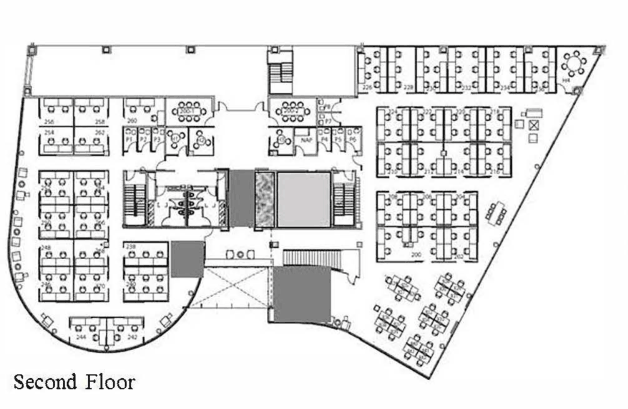
Architectural floor plan of the co-working hub’s second floor

2024

Proximate (Co-)Working: Knowledge Spillovers and Social Interactions

with Maria Roche and Christian Catalini

Management Science, 70(12), 8245–8264

Abstract

We examine the influence of physical proximity on between-start-up knowledge spillovers at one of the largest technology coworking hubs in the United States. Relying on the exogenous assignment of office space to the hub’s 251 start-ups, we find that proximity positively influences knowledge spillovers as proxied by the likelihood of adopting an upstream web technology already used by a peer start-up. This effect is largest for start-ups within close proximity of each other and quickly decays; start-ups more than 20 meters apart on the same floor are indistinguishable from start-ups on different floors. The main driver of the effect appears to be social interactions. Although start-ups in close proximity are most likely to participate in social coworking space events together, knowledge spillovers are greatest between start-ups that socialize but are dissimilar. Ultimately, start-ups that are embedded in environments that have neither too much nor too little diversity perform better but only if they socialize.

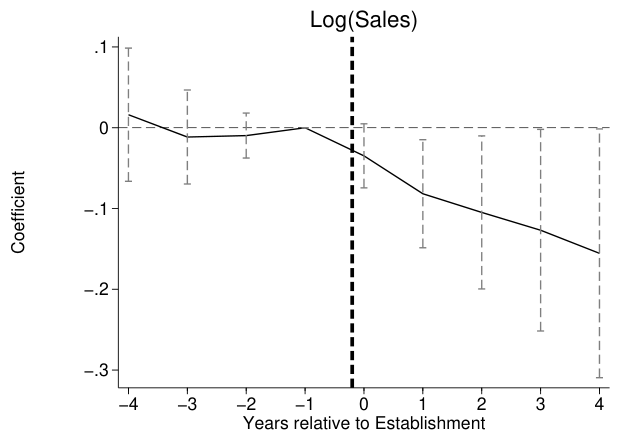
Event-study plot: retail store sales fall after a fulfillment center opens nearby

2024

Creative Destruction? Impact of E-Commerce on the Retail Sector

with Sudheer Chava, Manpreet Singh, and Linghang Zeng

Management Science, 70(4), 2168–2187

Abstract

Using an administrative payroll data set for 2.6 million retail workers, we find that the staggered rollout of a major e-commerce firm’s fulfillment centers reduces traditional retail workers’ income in geographically proximate counties by 2.4%. Wages of hourly workers, especially part-time hourly workers, decrease significantly driven by a drop in the number of hours worked. We observe a U-shaped pattern in which both young and old workers experience a sharper decrease in wage income. Consequently, some workers experience an increase in credit card delinquency. Using data for 3.2 million stores, we find that sales (employment) at proximate stores decrease by 4% (2.1%). Exits, especially of young and small stores, increase, and entry decreases. Our results highlight how creative destruction led by e-commerce impacts local labor markets.

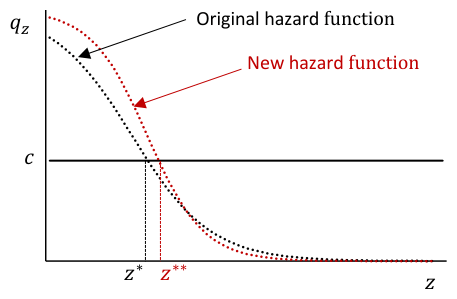
An improved prediction model swivels the hazard function clockwise, extending the optimal search duration from z* to z**

2024

Artificial Intelligence and Scientific Discovery: A Model of Prioritized Search

with Ajay Agrawal and John McHale

Research Policy, 53(5), 104989

Abstract

We model a key step in the innovation process, hypothesis generation, as the making of predictions over a vast combinatorial space. Traditionally, scientists and innovators use theory or intuition to guide their search. Increasingly, however, they use artificial intelligence (AI) instead. We model innovation as resulting from sequential search over a combinatorial design space, where the prioritization of costly tests is achieved using a predictive model. The predictive model’s ranked output is represented as a hazard function. Discrete survival analysis is used to obtain the main innovation outcomes of interest – the probability of innovation, expected search duration, and expected profit. We describe conditions under which shifting from the traditional method of hypothesis generation, using theory or intuition, to instead using AI that generates higher fidelity predictions, results in a higher likelihood of successful innovation, shorter search durations, and higher expected profits. We then explore the complementarity between hypothesis generation and hypothesis testing; potential gains from AI may not be realized without significant investment in testing capacity. We discuss the policy implications.

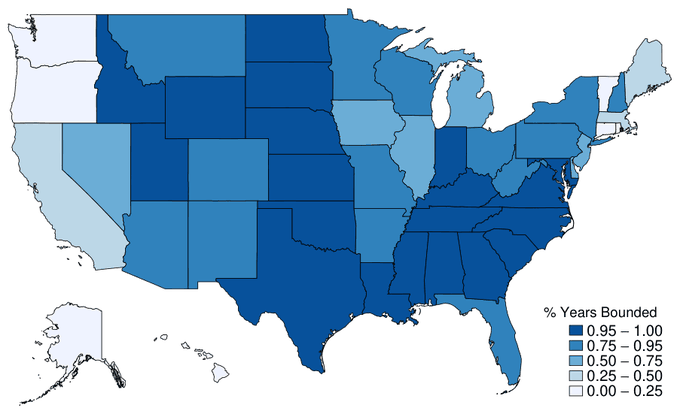
US map: share of years each state’s minimum wage is bound by the federal rate, 1989–2013

2023

Does a One-Size-Fits-All Minimum Wage Cause Financial Stress for Small Businesses?

with Sudheer Chava and Manpreet Singh

Management Science, 69(11), 7095–7117

Abstract

Using intertemporal variation in the bounding of a state’s minimum wage by the federal rate and business credit-score data for 15.2 million establishments, we find that the increase in labor costs caused by a higher federal minimum wage leads to lower business credit scores and worsens the financial health of small businesses in the affected states. In particular, small, young, labor-intensive, and minimum-wage-sensitive establishments located in affected states and those located in competitive and low-income areas experience higher financial stress. Increases in the minimum wage are associated with employment reductions and a higher exit rate for small businesses. Our results document some potential costs of a one-size-fits-all nationwide minimum wage for some small businesses.

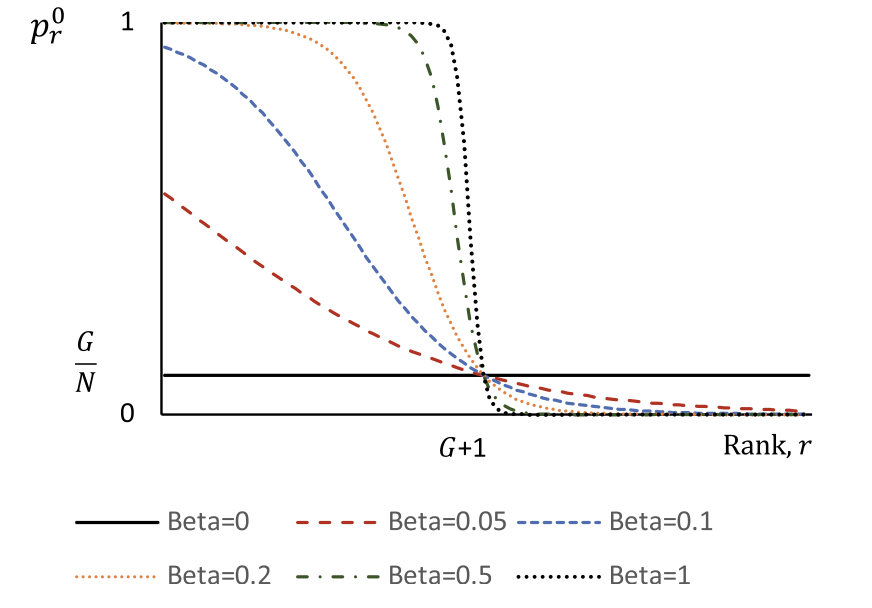
Logistic ranking-function curves swiveling toward a step function as prediction quality improves

2023

Superhuman Science: How Artificial Intelligence May Impact Innovation

with Ajay Agrawal and John McHale

Journal of Evolutionary Economics, 33(5), 1473–1517

Abstract

New product innovation in fields like drug discovery and material science can be characterized as combinatorial search over a vast range of possibilities. Modeling innovation as a costly multi-stage search process, we explore how improvements in artificial intelligence (AI) could affect the productivity of the discovery pipeline in allowing improved prioritization of innovations that flow through that pipeline. We show how AI-aided prediction can increase the expected value of innovation and can increase or decrease the demand for downstream testing, depending on the type of innovation, and examine how AI can reduce costs associated with well-defined bottlenecks in the discovery pipeline.

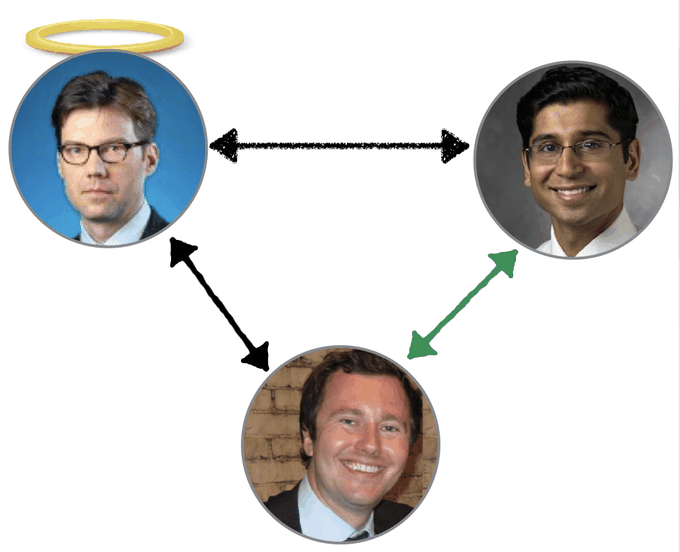
Slide diagram of a collaboration triad: a helpful third party, marked with a halo, connects two coauthors whose own tie persists

2022

Helpful Behavior and the Durability of Collaborative Ties

with Sharique Hasan and Sampsa Samila

Organization Science, 33(5), 1816–1836

Abstract

Long-term collaborations are crucial in many creative domains. Although there is ample research on why people collaborate, our knowledge about what drives some collaborations to persist and others to decay is still emerging. In this paper, we extend theory on third-party effects and collaborative persistence to study this question. We specifically consider the role that a third party’s helpful behavior plays in shaping tie durability. We propose that when third parties facilitate helpfulness among their group, the collaboration is stronger, and it persists even in the third’s absence. In contrast, collaborations with third parties that are nonhelpful are unstable and dissolve in their absence. We use a unique data set comprising scientific collaborations among pairs of research immunologists who lost a third coauthor to unexpected death. Using this quasi-random loss as a source of exogenous variation, we separately identify the effect of third parties’ traditional role as an active agent of collaborative stability and the enduring effect of their helpful behavior—as measured by acknowledgments—on the persistence of the remaining authors’ collaboration. We find support for our hypotheses and find evidence that one mechanism driving our effect is that helpful thirds make their coauthors more helpful.

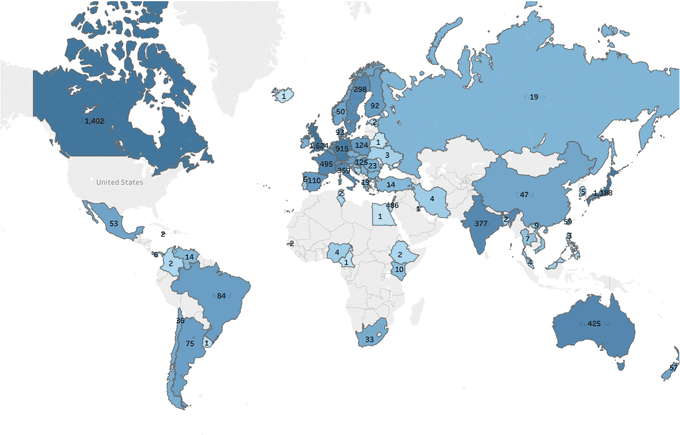
World map of US immigrant scientists’ source countries, N = 9,641

2019

Does Scientist Immigration Harm US Science? An Examination of the Knowledge Spillover Channel

with Ajay Agrawal and John McHale

Research Policy, 48(5), 1248–1259

Abstract

The recruitment of foreign-trained scientists enhances US science through an expanded workforce but could also cause harm by displacing better connected domestically-trained scientists, thereby reducing localized knowledge spillovers. We develop a model in which a sufficient condition for the absence of overall harm is that foreign-trained scientists generate at least the same level of localized spillovers as the domestically-trained scientists they displace. To test this condition, we conduct a hypothetical experiment in which each foreign-trained displaces an appropriately matched domestically-trained scientist. Overall, we do not find evidence that foreign-trained scientists harm US science by crowding out better-connected domestically-trained scientists, measured by citations by the US scientific community to their publications.

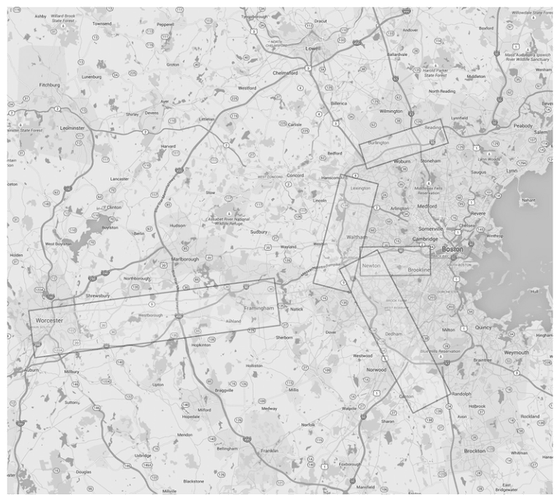
Map of Boston’s main knowledge-flow corridors, which trace the highway network

2017

Roads and Innovation

with Ajay Agrawal and Alberto Galasso

Review of Economics and Statistics, 99(3), 417–434

Abstract

We exploit historical data on planned highways, railroads, and exploration routes as sources of exogenous variation in order to estimate the effect of interstate highways on regional innovation: a 10% increase in a region’s stock of highways causes a 1.7% increase in regional patenting over a five-year period. In terms of the mechanism, we report evidence that roads facilitate local knowledge flows, increasing the likelihood that innovators access knowledge inputs from local but more distant neighbors. Thus, transportation infrastructure may spur regional growth above and beyond the more commonly discussed agglomeration economies predicated on an inflow of new workers.

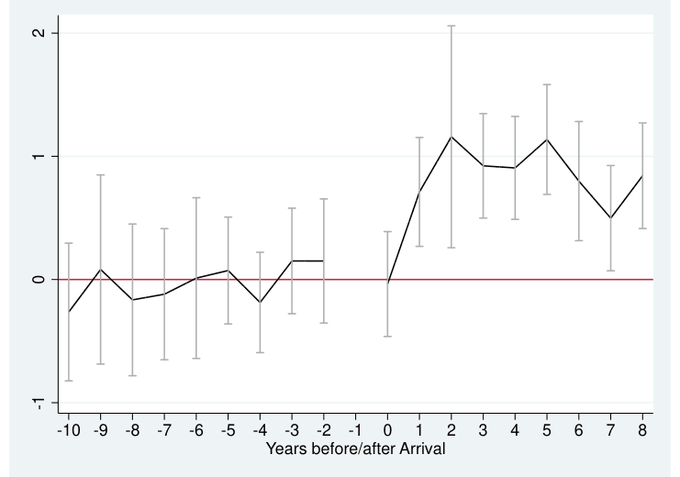
Event-study plot: the quality of new recruits jumps after a star scientist arrives

2017

How Stars Matter: Recruiting and Peer Effects in Evolutionary Biology

with Ajay Agrawal and John McHale

Research Policy, 46(4), 853–867

Abstract

The peer-effects literature highlights several distinct channels through which colleagues may affect individual and organizational performance. Building on this, we examine the relative contributions of different channels by decomposing the productivity effect of a star’s arrival on (1) incumbents and (2) new recruits. Using longitudinal, university-level data, we report that hiring a star does not increase overall incumbent productivity, although this aggregate effect hides offsetting effects on related (positive) versus unrelated (negative) colleagues. However, the primary impact comes from an increase in the average quality of subsequent recruits, an effect that is most pronounced at non-highly-ranked institutions. We discuss the implications of our results for star-focused strategies to improve organizational performance.

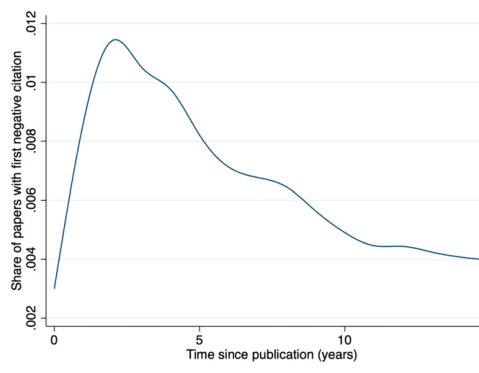
Share of papers receiving their first negative citation, by years since publication: a sharp early peak, then decline

2015

The Incidence and Role of Negative Citations in Science

with Christian Catalini and Nico Lacetera

Proceedings of the National Academy of Sciences, 112(45), 13823–13826

Abstract

Citations to previous literature are extensively used to measure the quality and diffusion of knowledge. However, we know little about the different ways in which a study can be cited; in particular, are papers cited to point out their merits or their flaws? We elaborated a methodology to characterize “negative” citations using bibliometric data and natural language processing. We found that negative citations concerned higher-quality papers, were focused on a study’s findings rather than theories or methods, and originated from scholars who were closer to the authors of the focal paper in terms of discipline and social distance, but not geographically. Receiving a negative citation was also associated with a slightly faster decline in citations to the paper in the long run.

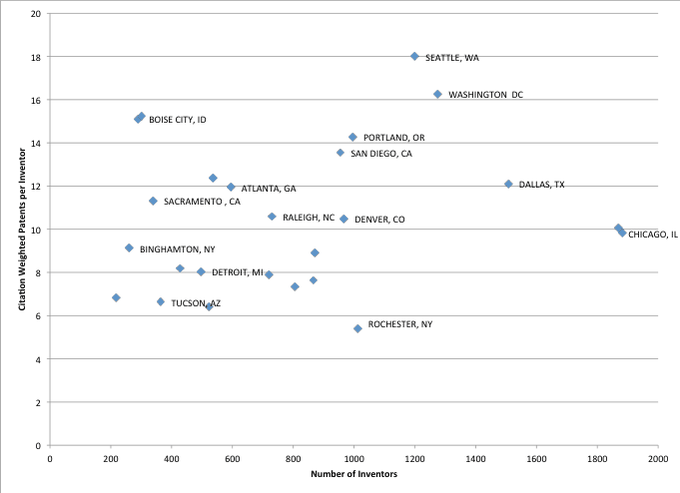
Scatter plot of citation-weighted patents per inventor across US cities

2014

Why Are Some Regions More Innovative Than Others? The Role of Small Firms in the Presence of Large Labs

with Ajay Agrawal, Iain Cockburn, and Alberto Galasso

Journal of Urban Economics, 81(1), 149–165

Abstract

We study the impact of small firms on innovation in regions where large labs are present. Small firms generate demand for specialized services that lower entry costs for others. This effect is particularly relevant in the presence of large firms that spawn spin-outs caused by innovations deemed unrelated to the firm’s overall business. We examine MSA-level patent data during the period 1975–2000 and find that innovation output is higher in regions where both a sizable population of small firms and large labs are present. The finding is robust to across-region as well as within-region analysis and the effect is stronger in certain subsamples in a manner that is consistent with our explanation.

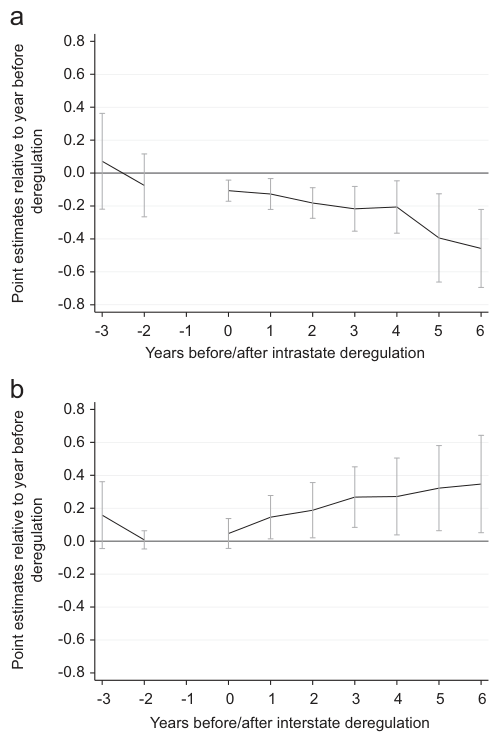
Patenting by young private firms falls after intrastate banking deregulation and rises after interstate deregulation

2013

Banking Deregulation and Innovation

with Sudheer Chava, Ajay Subramanian, and Krishnamurthy Subramanian

Journal of Financial Economics, 109(3), 759–774

Abstract

We document empirical support for a key micro-level channel—innovation by young, private firms—through which financial sector deregulation affects economic growth. We find that intrastate banking deregulation, which increased the local market power of banks, decreased the level and risk of innovation by young, private firms. In contrast, interstate banking deregulation, which decreased the local market power of banks, increased the level and risk of innovation by young, private firms. These contrasting effects on innovation also translated into contrasting effects on economic growth. Our study suggests that the nature of financial sector deregulation crucially affects its potential benefits to the real economy.

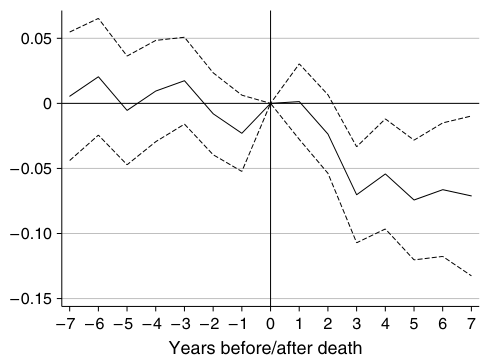
Coauthor impact-factor-weighted publications decline after the death of a helpful star scientist

2012

Reconceptualizing Stars: Scientist Helpfulness and Peer Performance

Management Science, 58(6), 1122–1140

Abstract

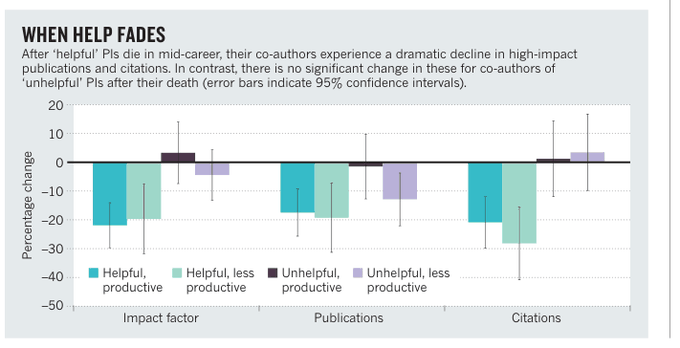
It is surprising that the prevailing performance taxonomy for scientists (star versus nonstar) focuses only on individual output and ignores social behavior, because innovation is often characterized as a communal process. To develop a deeper understanding of the mechanisms by which scientists influence the productivity of others, I expand the traditional taxonomy of scientists that focuses solely on productivity and add a second, social dimension: helpfulness to others. Using a combination of academic paper publications and citations to capture scientist productivity and the receipt of academic paper acknowledgments to measure helpfulness, I examine the change in publishing output of the coauthors of 149 scientists that die. Coauthors of highly helpful scientists that die experience a decrease in output quality but not output quantity. Meanwhile, the deaths of high productivity scientists that are not highly helpful do not influence their coauthors’ output. In addition, scientists who are helpful with conceptual feedback (critique and advice) have a larger impact on the performance of their coauthors than scientists who provide help with material access, scientific tools, or technical work. Within the context of evaluating scientific productivity, it may be time to update our conceptualization of a “star.”

Nature’s ‘When help fades’ chart: coauthors’ impact factor, publications, and citations decline after helpful PIs die; no significant change for unhelpful PIs

2012

Honour the Helpful

Nature, 489(7417), 496–497

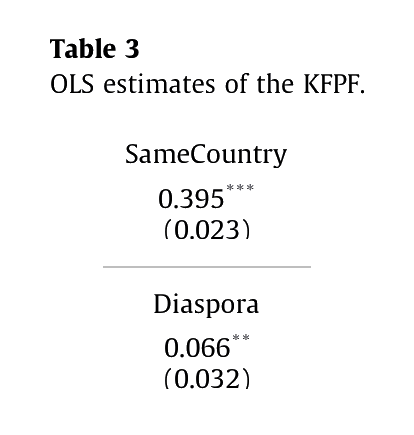
Verbatim Table 3 cells: the same-country co-location coefficient, 0.395, is six times the diaspora coefficient, 0.066

2011

Brain Drain or Brain Bank? The Impact of Skilled Emigration on Poor-Country Innovation

with Ajay Agrawal, Devesh Kapur, and John McHale

Journal of Urban Economics, 69(1), 43–55

Abstract

The development prospects of a poor country or region depend in part on its capacity for innovation. In turn, the productivity of its innovators, whom are often concentrated around urban centers, depends on their access to technological knowledge. The emigration of highly skilled individuals weakens local knowledge networks (brain drain) but may also help remaining innovators access valuable knowledge accumulated abroad (brain bank). We develop a model in which the size of the optimal innovator Diaspora depends on the competing strengths of co-location and Diaspora effects for accessing knowledge. Then, using patent citation data associated with inventions from India, we estimate the key co-location and Diaspora parameters. The net effect of innovator emigration is to harm domestic knowledge access, on average. However, knowledge access conferred by the Diaspora is particularly valuable in the production of India’s most important inventions as measured by citations received. Thus, our findings imply that the optimal emigration level may depend, at least partly, on the relative value resulting from the most cited compared to average inventions.

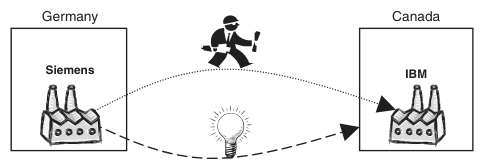
Diagram of cross-border labor mobility: an inventor moves from Siemens in Germany to IBM in Canada, and knowledge flows to the receiving country

2008

International Labor Mobility and Knowledge Flow Externalities

with Ajay Agrawal

Journal of International Business Studies, 39(8), 1242–1260 · lead article

Abstract

Although knowledge flows create value, the market often does not price them accordingly. We examine “unintended” knowledge flows that result from the cross-border movement of inventors (i.e., flows that result from the move, but do not go to the hiring firm). We find that the inventor’s new country gains from her arrival above and beyond the knowledge flow benefits enjoyed by the firm that recruited her (National Learning by Immigration). Furthermore, the firm that lost the inventor also gains by receiving increased knowledge flows from that individual’s new country and firm (Firm Learning from the Diaspora). Surprisingly, the latter effect is only twice as strong when the mover moves within the same multinational firm, suggesting that knowledge flows between inventors do not necessarily follow organizational boundaries, thus creating opportunities for public policy and firm strategy.

Book chapters

  • What’s Driving Entrepreneurship and Innovation in the Transport Sector? (with Derrick Choe and Rob Seamans) in The Role of Innovation and Entrepreneurship in Economic Growth, eds. Chatterji, Lerner, Stern & Andrews, University of Chicago Press, 2022 PDF NBER
  • Finding Needles in Haystacks: Artificial Intelligence and Recombinant Growth (with Ajay Agrawal and John McHale) in The Economics of Artificial Intelligence: An Agenda, eds. Agrawal, Gans & Goldfarb, University of Chicago Press, 2019 PDF NBER
  • Collaboration, Stars, and the Changing Organization of Science: Evidence from Evolutionary Biology (with Ajay Agrawal and John McHale) in The Changing Frontier: Rethinking Science and Innovation Policy, eds. Jaffe & Jones, University of Chicago Press, 2015 PDF NBER
  • Scientist Commercialization and Knowledge Transfer (with David Audretsch and Taylor Aldridge) in Entrepreneurship, Growth and Public Policy, eds. Acs, Audretsch & Strom, Cambridge University Press, 2009 PDF Cambridge